
The skilled craft have an unbeatable advantage: at the end of the day (or week), you can see what you’ve created. A new heating system in the basement, a freshly installed roof, a repaired car, or a perfectly renovated bathroom—the list goes on. But this focus on the purely tangible comes with a risk: it distorts our perception of the invisible processes happening behind the scenes. True leadership in a modern skilled crafts business means unifying the entire value chain—from marketing and sales to installation and after-sales service.
For quite some time now (though perhaps it’s also due to the expansion of my LinkedIn network into the skilled crafts sector), I’ve noticed what I consider to be a dangerous divide. An almost sacred elevation of the skilled crafts—or rather, the operational, visible part of the crafts. While the “construction site” is portrayed as “fulfilling work with meaning,” the academic, office-based part of the value chain is forgotten or even dismissed as “easy and essentially unnecessary work.”
Perhaps that used to be the case. At the very least, in craft businesses with a professional division of labor, this distinction is a thing of the past. Or at least it should be.
Times are changing
Anyone who wants to successfully lead a small or medium-sized craft business into the future must understand one thing: Our office colleagues are not a burdensome expense. They are the driving force that gets projects off the ground in the first place. Yet we often see a problematic dynamic in the industry: the polarization between “real” work on the construction site and the supposedly “easy” work at a desk—sometimes even viewed as a disruptive factor that actually just slows down the craftspeople and distracts them from their actual work with silly questions and requests. This is precisely where modern leadership is needed to lay a common foundation.
I won’t get bogged down in semantics here. But here’s an open question: If hands-on work in the crafts is labeled “honest work” or “real work,” what does that make the work done by people in offices or academia? “Dishonest work”? “Fake work”? What exactly is “dishonest work”? Fraud?
The Invisible Value Chain: Pride Is Not (Only) Born on the Construction Site
In many small businesses, office work is a mystery to workshop and installation staff. But let’s take a look at the process using the example of a modern HVAC (heating, ventilation, and air conditioning) company:
- In many small businesses, office work is a mystery to workshop and installation staff. But let’s take a look at the process using the example of a modern HVAC (heating, ventilation, and air conditioning) company.
- The setter screens these inquiries over the phone, filters out unsuitable projects, and thereby saves the closers valuable time and ensures that resources are used effectively.
- The sales representative conducts sales meetings and secures orders at competitive prices.
- The “Heating Department” handles logistics, assesses technical feasibility, and ensures that every screw is tightened properly.
- The purchasing department handles the components.
- The technicians are carrying out the work.
- The customer service department ensures ongoing support and maintenance.
When the technicians literally leave the yard in the morning, it’s not just a random starting point, but the result of meticulous preparation.
True leadership in the crafts ensures that every employee is aware of this connection. Even though customers are often just a name or a number in the CRM system to our colleagues in the office, they are an integral part of our mission to provide people with a warm, safe, and beautiful home. No service vehicle leaves the yard without the necessary preparations being made in the office.
The NASA anecdote as a model for the craft:
When President John F. Kennedy visited NASA headquarters in the 1960s, he met a janitor holding a broom. When asked what he was doing there, the janitor replied, “Mr. President, I’m helping to put a man on the moon.“
It is unclear whether this example is true or just an “urban legend.” But this is exactly the mindset we need in the crafts. An employee in accounting or marketing may not be the one installing heat pumps on-site—but with a clear vision, he or she understands why doing their own work flawlessly ensures the company’s overall growth and pride.
An administrative staff member at an aid organization may never travel to Africa, but knows that accounting is an integral part of enabling the medical and technical staff on the ground to alleviate the hunger and suffering of people in Mozambique or Somalia (fictional example). Or, to stick with the NASA example. The janitor who sweeps the floors of the aid organization’s building in a suburb of Hamburg (fictitious example) is doing his part to fight hunger in Africa. Just as the staff in the cafeteria or at the front desk.
A clear vision (and mission) makes this shared goal and narrative visible to all employees. Every single day. The key is to apply this principle to our work.
Dangerous Polarization: Skilled crafts vs. Academia on Social Media
As a content creator or business owner in the skilled crafts, you’re increasingly coming across a certain narrative on platforms like LinkedIn or Instagram: the deliberate pitting of (practical) skilled crafts against academia. Skilled crafts are often portrayed as the only “honest” work, while academics are generally depicted as out of touch with reality or even “lazy.” Conversely, the narrative is perpetuated: Academics look down on the skilled crafts without providing any evidence to support this claim.
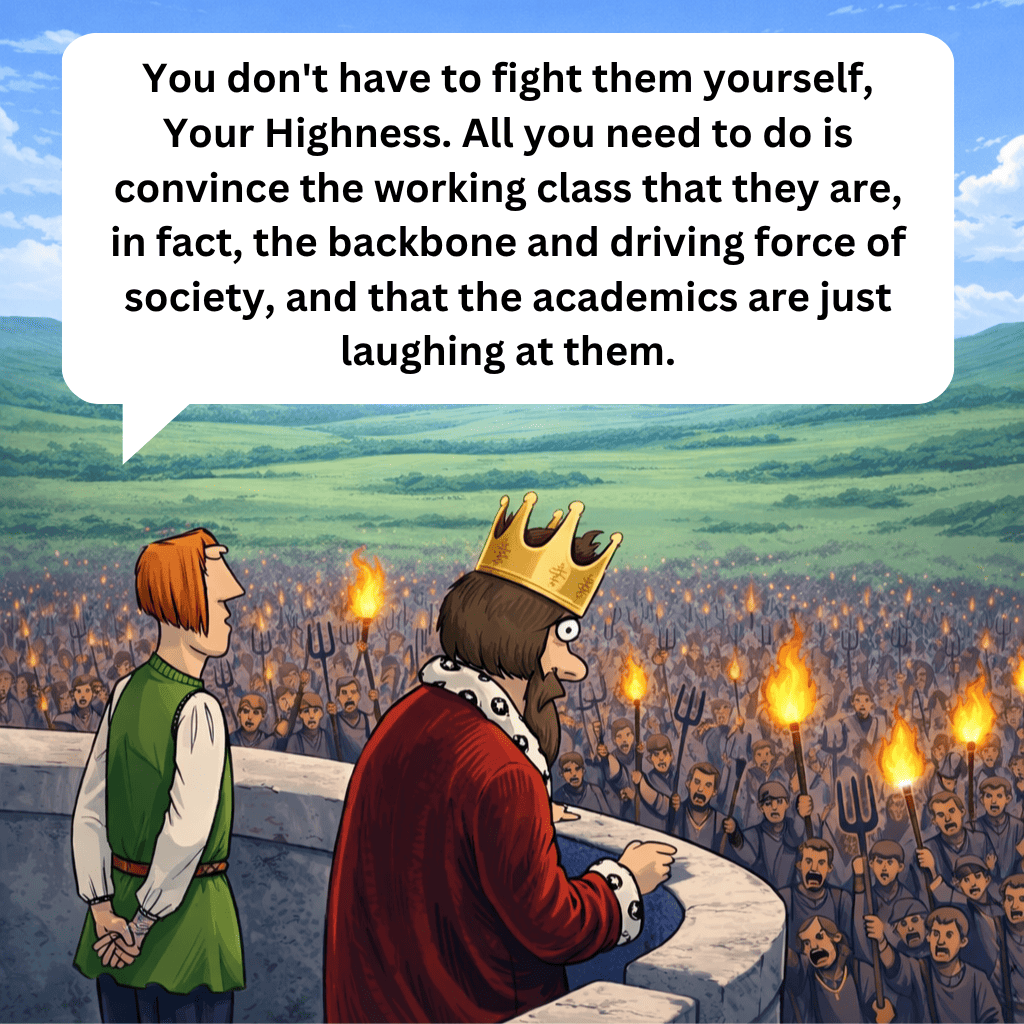
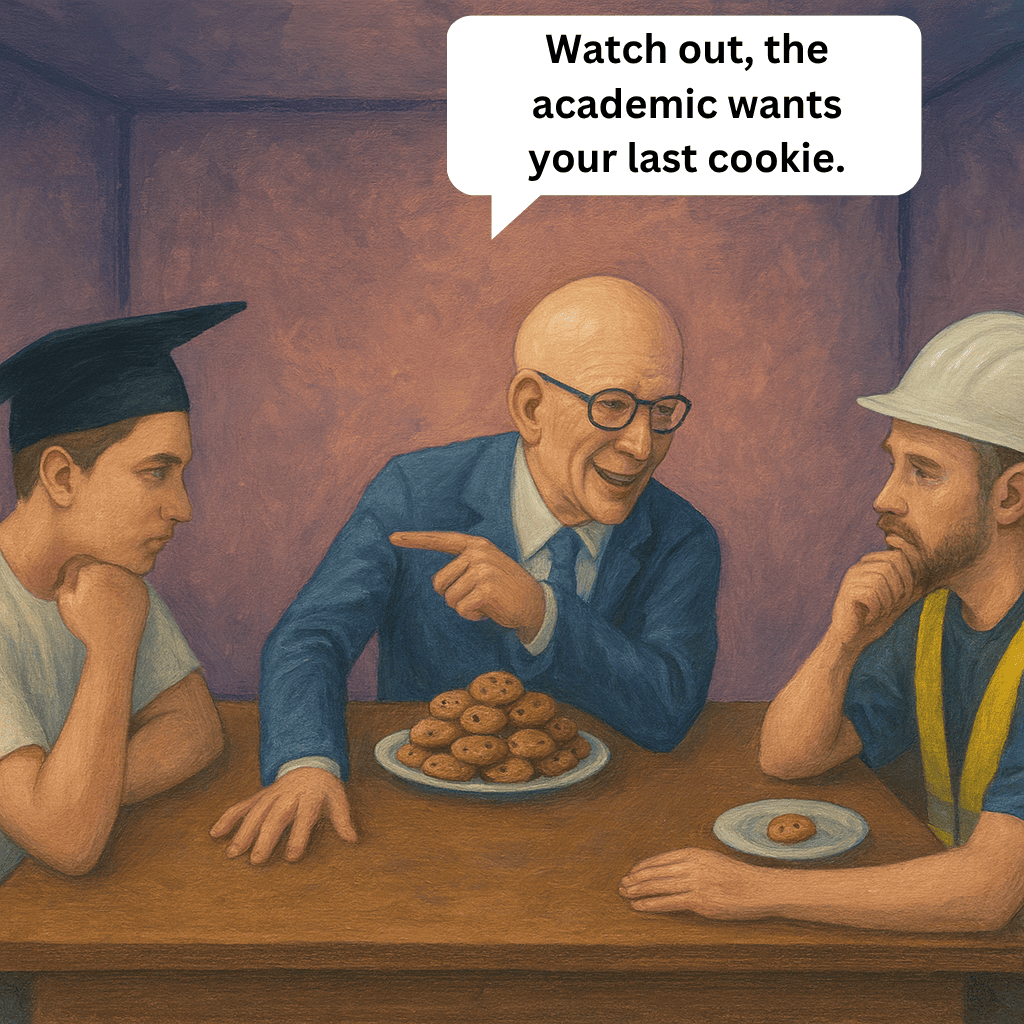
In the short term, this polarization may feed the algorithms through high engagement rates and provocative comments. In the long term, however, it is harmful to business and socially toxic. Prejudices exist on both sides—to deny that would be unrealistic. However, reinforcing them rather than breaking them down neither solves the problem of recruiting new talent nor improves employer branding—not to mention the image of both professional groups.
We live in an economy characterized by a high degree of division of labor. The digital sector needs the skilled crafts to build the physical infrastructure. The skilled crafts, in turn, need highly trained office staff, cloud-based CRM systems, and digital marketing strategies just to remain competitive. A modern vision for the skilled crafts must not be backward-looking. She must practice cooperation rather than confrontation.
Leadership and Purpose: What SME Executives Need to Do Now
How can this insight be translated into effective leadership within your own business? Here are three concrete strategies for business owners in the skilled crafts:
1. Create a shared vision/mission
Clearly articulate what your business stands for. It’s not about selling a specific service, but rather about improving quality of life and bringing economic benefits to the region, helping people live healthier lives, or supporting families—to name just a few examples. Involve all departments in this mission. Make successes visible to everyone—for example, by sharing before-and-after photos of projects in the internal chat so the office team can see the finished result, or so technicians can see how many new projects Marketing and Sales have secured this month. Positive Google reviews also show all employees how satisfied customers are—from the initial outreach by Marketing, through consultation and installation, to long-term support. Please don’t misunderstand me here. Throwing a few photos into the office chat isn’t a mission. This requires a clear, “lengthy,” and strategic process.
2. Encourage a change of perspective
Have your marketing and sales staff spend a day on the job site on a regular basis. And vice versa: Invite field technicians to sit in on a sales or training meeting at the office for an hour. This fosters mutual understanding of each other’s challenges and effectively breaks down preconceptions.
3. As a content creator, consciously go against the grain
If you create content in the skilledcrafts sector, avoid cheap “academic bashing” (and, conversely, content creators from academia should, of course, refrain from bashing craftspeople). Instead, use your reach to highlight the complexity, professionalism, and high level of digitalization in modern skilled crafts businesses. This attracts the real A-players—both for the job site and for management.
4. Digitalization (and especially AI) as a tool.
Show how digitalization (CRM, AI, etc.) helps not only to generate new business but also to take the support provided to prospects and customers to a whole new level. This also involves clearly identifying the potential (as well as the current limitations) of AI in the skilled crafts. AI is neither a gimmick that is only relevant for the office, nor will it remain permanently absent from the construction site.
Conclusion: Mutual respect is the key to success
A sense of purpose and identification with one’s work are powerful drivers of employee retention in the skilled crafts. Along with fair and performance-based compensation, they form the foundation of a strong team. True leadership is demonstrated by bridging divides rather than deepening them. Only when the office and the job site see themselves as equal partners in a shared value chain will the skilledcrafts—and thus your business as well—grow sustainably and exude enough appeal at all levels to inspire capable young people.