The modern marketing and sales funnel is under intense pressure to change. Buyers are becoming more independent in their research, spending more time investigating and moving across many touchpoints before they are ready to engage in conversation. Marketing and sales therefore need to work more closely together to provide consistent support to prospects. At the same time, many sales teams are overloaded with routine tasks, which can have a negative impact on closing rates. Automation and AI provide noticeable relief here and create space for activities that generate real added value. Not as an end in itself, but as targeted support for personal customer conversations.
What can be sensibly automated
Many steps in lead management in CRM follow recurring patterns. These processes can be efficiently automated without compromising quality.
Modern email workflows handle greetings, follow-ups, and appointment reminders, ensuring consistent communication. (AI) chatbots conduct initial qualification dialogues and answer questions around the clock—an advantage that is particularly effective in the early stages of research.
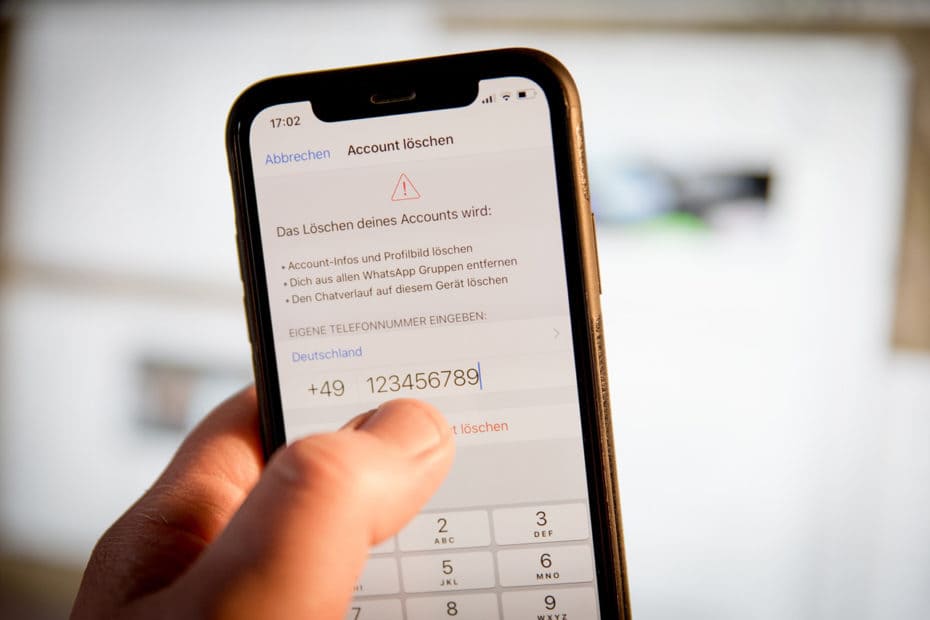
Direct channels such as WhatsApp (including smartphone messengers) create a personal connection to prospective customers without placing unnecessary strain on sales. Automated processes provide structure, reduce errors, and avoid additional complexity.
However, it is crucial that these automated processes are controlled and presented in a clear, transparent, and structured manner in the CRM. This enables the person responsible, such as the Head of CRM, to coordinate and optimize workflows and AI systems in a targeted manner. Transparent mapping of these processes is of central importance here.
AI as a strategic assistant in lead nurturing
Artificial intelligence adds an analytical and predictive component to this automation. AI-based systems can evaluate behavioral data, recognize patterns, and prioritize which leads are ready to buy. Whether the CRM supports this depends on the specific system—not every solution is yet capable of cleanly capturing or processing such data.
Predictions about optimal contact times and personalized content increase the relevance of every interaction. This intelligent support makes the interaction between marketing and sales more precise and efficient throughout the entire customer journey.
The reality is often somewhat more complex, but no less exciting:
Modern CRM systems already offer the option of communicating directly with customers via WhatsApp or voice AI. You can automatically process incoming inquiries via messenger or telephone. These technologies are now so advanced that AI-based systems can independently make appointments, answer specific questions, or even make initial (outgoing) phone calls (setter calls), so that human interaction is only necessary during the closing phase.
However, it is important to note that despite enormous progress, these systems are still in the early stages of development. Companies must also carefully examine legal aspects before using such technologies. In particular, it is essential to inform customers transparently about the use of AI in order to comply with both legal requirements and professional standards (keyword: building trust). Furthermore, the quality of voice AI must ensure that customer information is accurately recorded and forwarded in a structured manner to the responsible employees (e.g., closers) or noted in the CRM system.
As these technologies are still under development, particularly between 2025 and the following years, each company should weigh up individually whether the use of AI solutions designed to replace direct human interaction is sensible and technically feasible. Trust, expertise, and efficiency are at the heart of this decision.
Let’s remember: AI is not an end in itself,
but it’s not rocket science either.
Practical examples: Small steps, big impact
Many SMEs demonstrate how effective a step-by-step approach can be. Welcome sequences provide clear orientation, segmentation brings structure, and automated prioritization facilitates daily sales work.
For example, incoming inquiries received via a form on the website can be seamlessly integrated into automated workflows. Similarly, inquiries via web chat (also known as chat widgets) can trigger specific actions. It is possible to program complete email campaigns that provide interested parties with relevant information at regular intervals, thereby continuously introducing them to the company and sales (closers). The content can be gradually deepened in order to strengthen customer loyalty both technically and emotionally. This process, known as “scoring,” aims to make prospects more informed and curious through targeted communication until personal contact is finally made by the sales department.
The successful implementation of such strategies depends largely on the expertise and creativity of the Head of CRM.
A well-structured CRM system offers almost unlimited possibilities for optimizing marketing and sales processes. Once the entire process has been thought through, the Head of CRM can analyze each handover point and workflow to identify potential for automation or the use of AI. Technical expertise and innovative approaches are crucial here in order to exploit the full potential of the CRM system.
When information flows smoothly into the CRM and transfers are defined, transparency and speed are created. These seemingly small adjustments often lead to higher closing rates and shorter processing times.
Pitfalls: Technology remains a tool, not a substitute
Despite all its advantages, automation must not appear impersonal. The database in CRM is crucial—only well-maintained data enables reliable processes. All employees involved are responsible for this.
It is essential that all employees are encouraged to maintain the data in the CRM system carefully and conscientiously. Different personalities approach this task differently, but the overarching goal of a CRM system should always be clear: to optimize customer contact and thus promote the success of the company. It is important to emphasize that CRM is not a control tool for employees.
Employees should not be concerned that their work performance will be negatively evaluated through the use of CRM. If there are uncertainties or fears, it is advisable to seek dialogue and, if necessary, offer training to strengthen confidence and competence in using the system. At the same time, it must be clearly communicated that the disclosure of customer interactions is not intended to disadvantage employees, but rather to promote cooperation and knowledge exchange within the company.
Employees who are used to withholding their knowledge for fear of disadvantages should understand that a modern CRM system is based on transparency and collaboration. The days of withholding knowledge are over. Inadequate or incorrect data maintenance can not only impair the automation processes of the CRM, but also have a negative impact on the efficiency and success of the company. Automations are based on the available data – if this is inaccurate or incomplete, it can do more harm than good. Careful and responsible data maintenance is therefore essential.
Last but not least, automation and AI must be strategically embedded. Pure tactics without direction quickly lead to actionism. Teams also need to have confidence in the systems so that technology actually reduces the workload rather than creating additional effort.
Pitfalls: Software proliferation in SMEs; or: Help, not another piece of software!
The digital infrastructure of many medium-sized companies has grown over many years. Departments have usually selected their tools independently and for practical reasons. This has resulted in a landscape of functioning individual solutions, but without a uniform overall picture.
Business processes ranging from marketing to sales to invoicing span multiple departments, while the systems used strictly map these processes along departmental boundaries. This creates gaps that must be compensated for through meetings, emails, and manual handovers.
With each new application, these interfaces become more apparent. Digitalization thus does not become an accelerator, but rather reinforces existing organizational weaknesses.
In many companies, parallel system environments also arise:
Sales works with its pipeline, service with ticket structures, and accounting with accounting records. This separation is not only technical, but also shapes the corporate culture. It promotes different perspectives on customers, projects, and processes.
Even carefully maintained CRM data can remain fragmented and lead to efficiency losses. Employees must therefore be clearly convinced of the advantages of CRM with automation and AI functions (keyword: getting employees on board), as mentioned above. Furthermore, the implementation of a CRM should always be carried out with a view to interfaces with other systems.
Conclusion:
Automation and AI take lead generation and lead nurturing to a whole new level. Recurring tasks are reduced, while the quality of customer communication increases. The result is a modern funnel that works efficiently and at the same time appears more human.
Best of: These tools can be scaled without significant additional costs. They enable a sales process that is both more precise and more personal—and thus better meets the expectations of today’s buyers. In other words, AI doesn’t care whether it sends 10 or 1,000 emails or responds to a chat request at 3 a.m. from a prospective customer who can’t sleep. AI, combined with automation and a professional website, is the salesperson who never sleeps!
Frequently asked questions (FAQs)
Automated processes take over recurring tasks such as follow-ups, appointment reminders, or initial qualification, thereby significantly reducing the workload for the sales department. This frees up more time for value-adding discussions and strategic activities.
AI evaluates behavioral data, creates priorities, and provides forecasts for optimal contact times. This increases the relevance of communication throughout the entire customer journey.
A structured CRM forms the basis for functioning workflows. Transparent processes, clean data, and clear transfers ensure the quality of automation and enable the targeted use of AI.
Email workflows, chatbots, web chat triggers, WhatsApp integrations, and simple segmentation are proven first steps. They create immediately noticeable efficiency without high technical hurdles.
Unmanaged data, unclear processes, and a lack of trust within the team can significantly reduce the effectiveness of the systems. Automation remains a tool and therefore requires strategic integration and transparent communication within the company.